
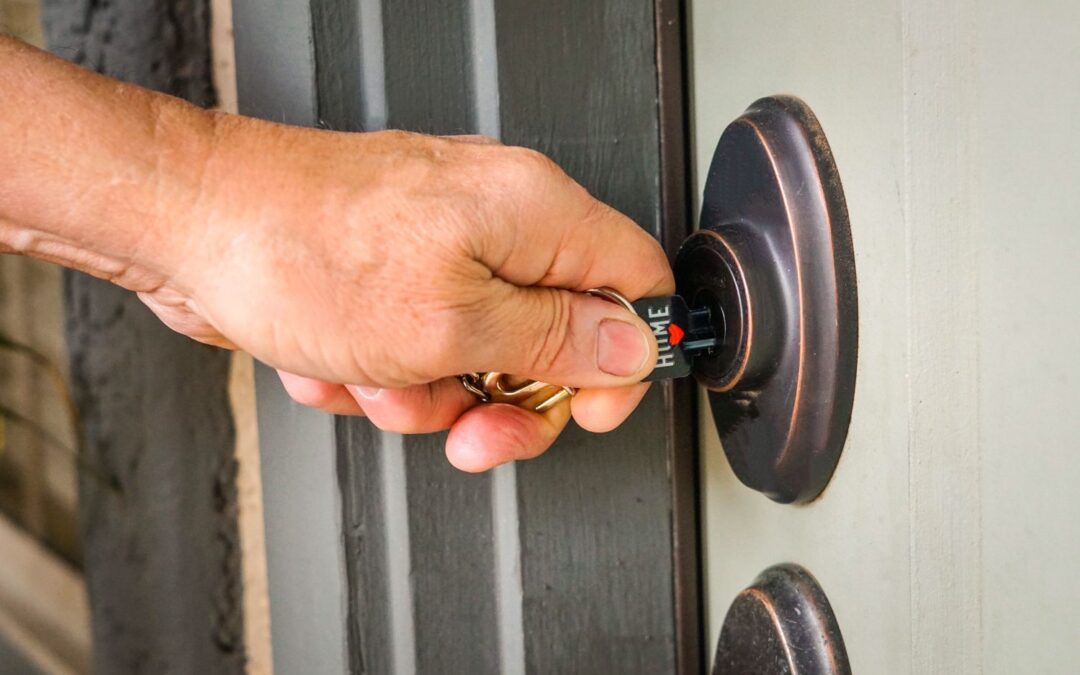
A stuck deadbolt or hard-turn key does not always mean the lock is broken. Start with safe checks first. Look at door alignment, tighten loose screws, and test the key and lock with a graphite stick. Many lock problems come from a door that shifted a little, a dry lock, or loose hardware. If the key will not turn with light pressure, stop and check the basics before you force it and make a small issue worse.
Why a deadbolt gets stuck in the first place
Locks are picky little machines. They like things lined up just right. When your deadbolt starts acting like a mule that does not want to move, there is usually a simple reason.
A deadbolt works best when three parts meet cleanly, the key, the lock cylinder, and the strike plate in the door frame. If just one part is off by a hair, the key may feel rough, tight, or frozen.
Here are the usual causes:
- The door sagged and the bolt no longer lines up with the hole in the frame
- Hinge screws got loose
- The strike plate shifted
- Dirt or old grime got inside the keyway
- The lock dried out
- The key is bent or worn down
- Humidity caused the wood door or frame to swell
- Heat made parts expand a bit and rub
If your key turns fine when the door is open, but not when the door is shut, that points to an alignment issue more than a bad lock. If needed, a Residential locksmith or Emergency locksmith can check whether the problem is with the lock or the door fit.
Start with the easiest test
Open the door. Then lock and unlock the deadbolt while the door is open.
This tiny test tells you a lot.
If the deadbolt moves smoothly with the door open, the lock body may be okay. The problem is likely where the bolt meets the frame.
If it still sticks with the door open, look at the key, the cylinder, and the screws next.
A lot of folks in Houston find this out after a long day, standing at the front door in work boots, muttering at a lock like it can hear them. Bad news, the lock cannot hear you. Good news, this test can save you time fast. If the issue keeps going, Contact Us for help.
Safe checks you can do right now
Keep these checks simple. Use light pressure only. If the key bends, catches, or feels like it may snap, stop.
Check the key
Try the key in good light.
Look for:
- Bent spots
- Cracks
- Worn teeth
- Dirt stuck on the blade
If you have a spare key, test that one too. A worn key can make a good lock seem bad.
Do not twist hard. A broken key in the lock turns a small headache into a bigger mess. If you need another key made after testing, Residential key duplication may help.
Check door alignment
Stand back and look at the gap around the door.
Ask:
- Is the gap even on all sides
- Does the door rub the frame
- Do you need to push or lift the door a little to lock it
- Does the deadbolt hit the strike plate before it goes in
A door that dropped even a little can throw off the bolt path.
Try this test:
- Close the door gently
- Lift up on the handle a bit
- Turn the key with light pressure
If the lock works better when you lift or push the door, alignment is the issue. In some cases, Residential lock repair or Residential lock installation may be the next step if the hardware is also worn.
Tighten screws
Grab a screwdriver and check:
- Hinge screws on the door
- Hinge screws on the frame
- Screws on the deadbolt faceplate
- Screws on the strike plate
Loose screws let the door shift. Tightening them can bring things back into line.
Do not overtighten and strip the holes. Snug is enough.
Use a graphite stick, not oily spray
A dry lock may bind and feel gritty. A graphite stick can help the key slide without attracting dirt.
Rub graphite on the key lightly, then insert and remove it a few times. Turn gently. If you have a graphite lock product in stick form, use a small amount only.
Skip heavy oil. Oil can trap dust and gum up the lock over time. For more on general lock care, see https://en.wikipedia.org/wiki/Lock_and_key.
Look at the strike plate
The strike plate is the metal piece on the frame where the bolt goes in.
Check for:
- Scrape marks above or below the hole
- Loose screws
- A hole blocked by paint, dirt, or wood swelling
If you see fresh scrape marks, the bolt is rubbing instead of sliding in cleanly.
If this happens, try this
Use this quick guide to narrow it down.
- If the key turns fine with the door open, then check door alignment and the strike plate
- If the key is hard to insert, then inspect the keyway for dirt and test a spare key
- If the key goes in but turns rough, then try a graphite stick and test again
- If the lock works only when you lift the door, then tighten hinge screws
- If the deadbolt stops halfway, then look for scrape marks on the strike plate
- If the key bends or feels stuck, then stop turning and call a locksmith
- If the lock suddenly changed after rain or humidity, then check for door swelling
- If the inside thumb turn is also hard to move, then the lock body may be wearing out
If these checks do not solve it, Residential lock replacement, Residential lock rekeying, or an Emergency locksmith visit may be the next step.
What we usually see in Houston, TX
In Houston, weather and houses team up to make locks act funny. Heat, rain, and humidity can swell wood doors and frames. That changes alignment fast. We often see this in older homes near The Heights and in houses with front doors that get full afternoon sun. Along roads with heavy traffic and dust, like parts near Westheimer, grime can also work its way into locks over time.
For local weather patterns that can affect doors and locks, see https://www.weather.gov/. If your home shows repeated seasonal sticking, a Residential locksmith can inspect it.
Weather can mess with your lock
Houston weather is no joke. Your lock feels it too.
Heat
Hot days can make metal parts expand a bit. Wood doors can also shift. A deadbolt that worked in spring may drag in late summer.
Humidity
Humidity can swell wood doors and frames. That can pinch the latch side of the door and throw the deadbolt off line.
Rain
Moisture can bring swelling and rust. If the door gets wet often, the strike hole may tighten up.
Cold snaps
Houston does get cold spells now and then. Metal contracts in cold weather. A lock that already has wear may feel tighter on a cold morning.
A lock is a lot like a picky old truck. Change the weather, and it may need a little extra patience.
Small fixes you should not try
Some internet tips sound bold. Bold is not always smart.
Do not:
- Force the key with pliers
- Pour cooking oil into the lock
- Spray a bunch of grease into the keyway
- File down the key
- Hammer the deadbolt
- Take apart the cylinder if you are not sure how it goes back together
These can turn a simple repair into lock damage, door damage, or a key snapped off inside the cylinder.
A short safety note, if the lock is on a main entry door and the key will not come out, do not leave the home unsecured while testing random fixes. If needed, reach out through Contact Us.
Quick truth checks
Here are a few common claims people hear, and what really helps.
- Myth, if the key turns hard, you just need more force
Fact, extra force often breaks the key or wears the lock faster - Myth, any spray lube works fine in a deadbolt
Fact, many oily sprays collect dust and make the lock dirtier later - Myth, a stuck deadbolt means the whole lock is ruined
Fact, many cases come from loose screws or poor alignment - Myth, if the lock works sometimes, there is no real issue
Fact, early sticking often means a small problem that grows over time
A simple care schedule
A little upkeep beats a front-door standoff at night.
| Timing | What to do | Why it helps |
|---|---|---|
| Weekly | Check if the key turns smoothly, look for rubbing or scraping | Catches trouble early |
| Monthly | Tighten hinge and strike plate screws, wipe dirt from the key | Keeps alignment steady |
| Every 6 months | Test with a spare key, use a small amount of graphite if the lock feels dry | Helps the cylinder move cleanly |
| Yearly | Inspect door fit, weather wear, and rust around lock parts | Finds bigger wear before failure |
If your front door gets lots of sun or rain, check it more often.
When a stuck deadbolt means stop
Some signs mean it is time to put the screwdriver down.
Stop trying fixes if:
- The key is half turned and will not move back
- The key is bending
- Part of the key chipped
- The inside thumb turn is jammed
- The lock feels loose in the door
- You hear grinding inside the cylinder
- The deadbolt is stuck in the locked position and you cannot secure the door right
That is when a trained locksmith can save the hardware and spare you from bigger damage. Emergency Locksmith offers Emergency locksmith and Residential lock repair service in Houston, TX.
A short real-life example
A homeowner near a brick home off a side street in Houston had a deadbolt that only locked if he pulled the door hard. He thought the lock was dying. The lock was fine. Two loose hinge screws let the door sag just enough for the bolt to miss the strike hole. A screwdriver fixed the issue in minutes.
That is how these problems often go. The lock gets blamed, but the door is the sneaky troublemaker.
FAQs
Why is my deadbolt hard to turn only at night?
Cooler air, door movement, and daily heat can shift the fit by evening. Check if the lock works with the door open. If yes, alignment is the likely cause.
Can I use WD-40 on a stuck deadbolt?
It is better to skip oily products inside the keyway. A graphite stick is a safer pick for many standard locks.
What if my key works from inside but not outside?
That can point to wear in the outer cylinder, dirt in the keyway, or a worn key. Test a spare key first.
Why does my key go in but not turn?
The lock may be dry, dirty, or out of line. It can also mean the wrong key was copied poorly or the key is worn down.
Is a hard-turn key a security problem?
It can be. If the lock sticks badly, you may not get in fast, or you may have trouble locking up. It is smart to fix it before it gets worse.
Can humidity really affect my front door lock?
Yes. In Houston, humidity can swell wood doors and frames. That small shift can make the deadbolt rub or miss the strike plate.
When should I stop trying to fix it myself?
Stop if the key bends, the lock grinds, the thumb turn jams, or the deadbolt gets stuck halfway. Those signs mean more force may cause damage.
Does tightening screws really make that much difference?
Yes. Loose hinge or strike plate screws can move the door just enough to make the lock bind. It is a simple check with a big payoff.
If your stuck deadbolt or hard-turn key is still giving you trouble, Emergency Locksmith can help get your door working right and secure again. We serve Houston, TX with fast, skilled locksmith service for jammed locks, deadbolt issues, key problems, and home lock repairs. Call (832) 979-9228 or visit https://emergency-locksmith-services.com to get help from a local team that can save you time, spare your lock from damage, and bring back smooth, safe entry. You can also visit Contact Us for service details.