
If a broken car key is stuck in a door, trunk, or ignition, stop turning or pushing it. Don't use glue, prying tools, or household sprays. Get to a safe place, keep the broken key head, and leave the fragment alone. A flush or buried piece, an ignition that won't turn, or a car you can't secure calls for a licensed automotive locksmith.
Put your safety ahead of the key
Before looking at the lock, check where you're standing. In a Houston parking lot or apartment garage, choose a waiting spot away from moving cars. At a roadside stop, don't lean into a door exposed to passing traffic just to inspect the break.
If someone is trapped and in immediate danger, or there's fire or smoke, call 911 first. A routine locksmith visit isn't the first response to those dangers.
Otherwise, decide whether you can wait safely near the vehicle. A stuck key doesn't make the lock worth working on in an unsafe spot. Your next move should protect you, even if that leaves the car problem unresolved for now.
Why improvised fixes can make removal harder
The opening around a key fragment is small. Trying to reach around it can push the metal farther inside or damage lock parts. KeyMe Locksmiths' broken-key guidance warns against improvised tools and materials because they can damage the inside of the lock.
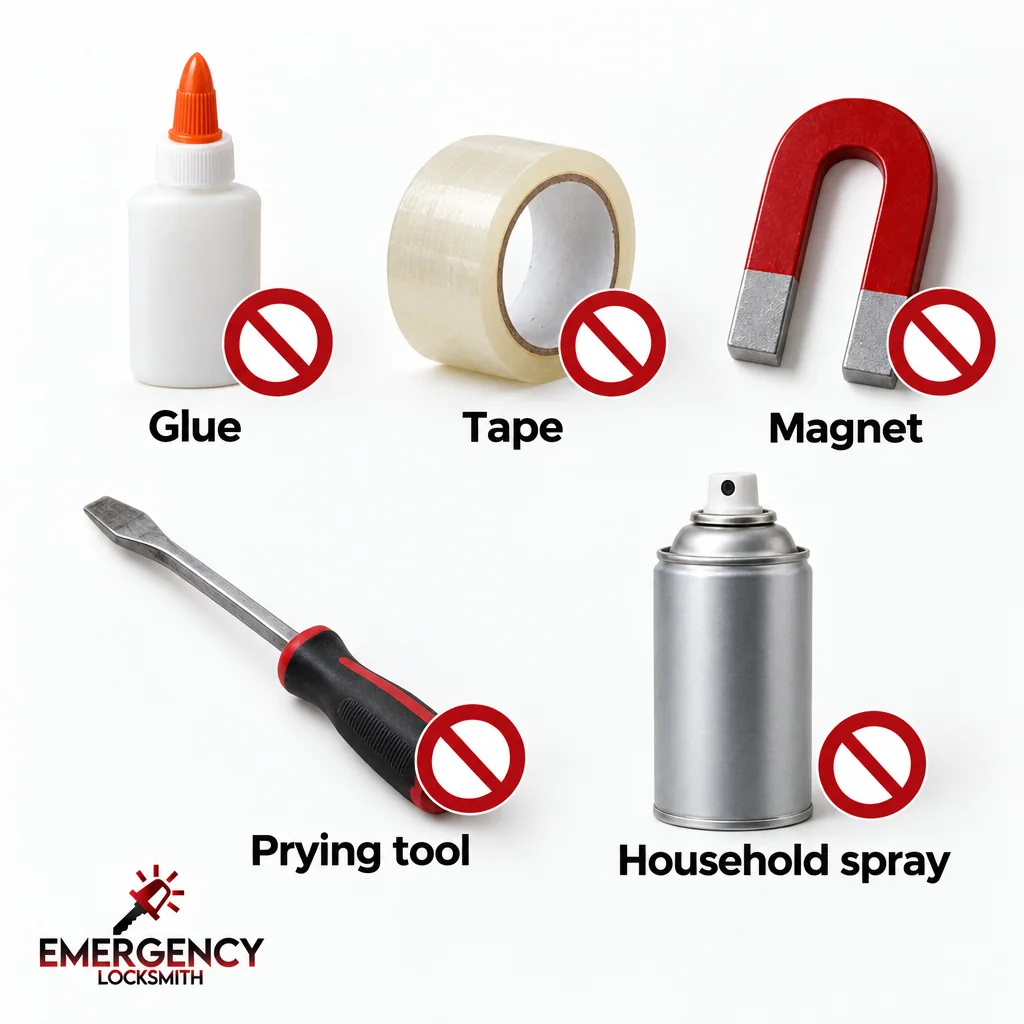
- Glue and tape add material to an opening that already holds a broken piece. They aren't a safe way to join the key back together inside the lock.
- Prying tools can press against the fragment and nearby lock parts. A tool that fits into the opening isn't necessarily safe to use there.
- Magnets and household lubricants aren't reliable shortcuts. Don't treat a spray or another household item as a harmless first attempt.
If an attempt meets resistance, more force isn't useful information. Stop rather than testing a second tool. You can't see the condition of the internal parts from the keyhole.
Check the broken car key without touching it
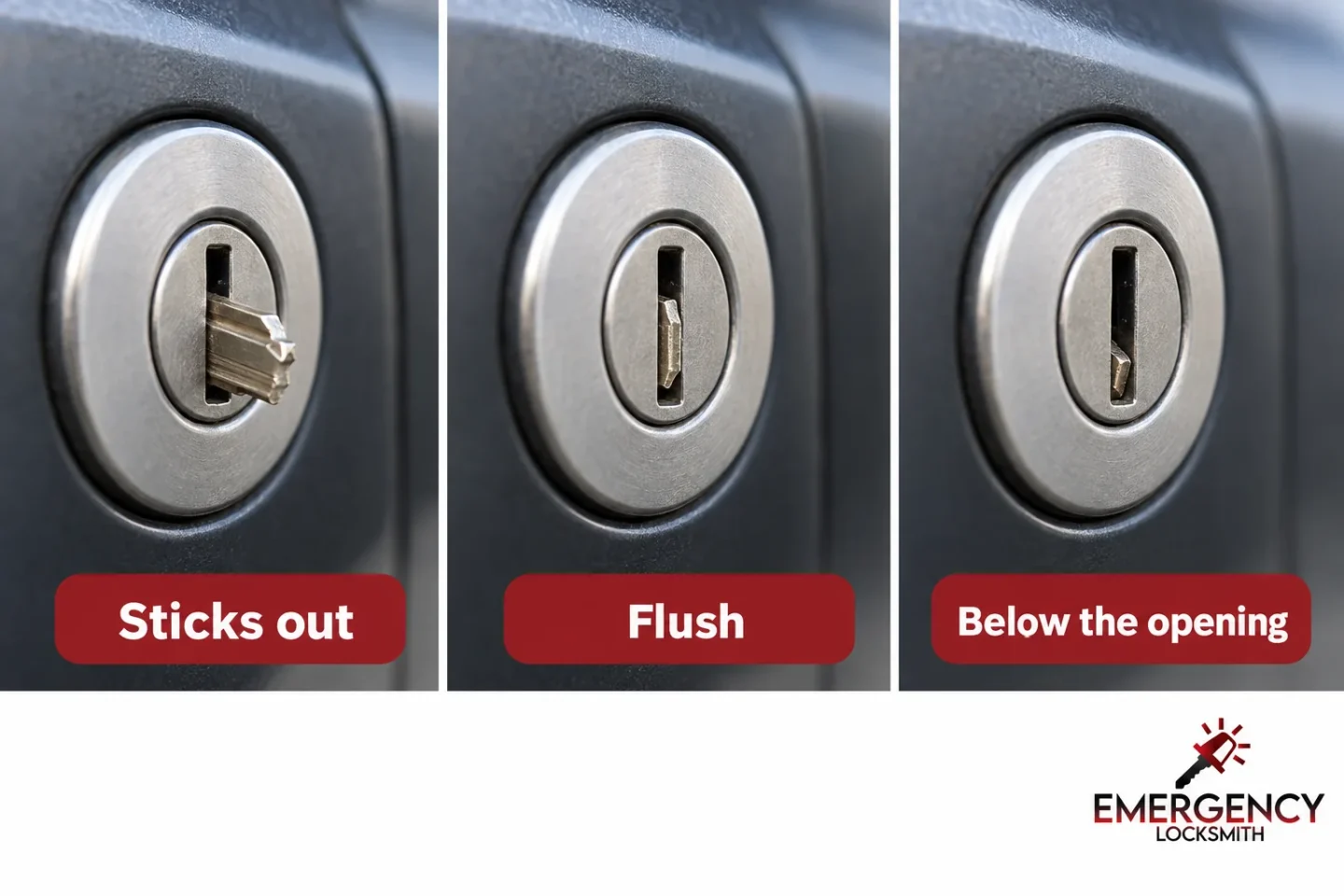
From a safe spot, look at the lock opening. Describe the fragment in plain words. Does it stick out, sit flush with the opening, or sit below it? Flush means the broken edge is level with the lock face.
A phone light may help you see the edge, but don't insert anything to measure its depth. If you can't see the piece clearly, say that rather than guessing.
Use that description when arranging professional car key extraction. A visible edge doesn't prove that removal will be simple or that the lock is undamaged.
The affected lock changes your next move
If the key broke in a door or trunk
Another accessible door may let you reach your belongings without disturbing the damaged lock. A spare key is useful only at an unaffected lock. Don't insert it behind the fragment or use it to push the broken piece through.
Getting inside doesn't resolve whether the car can be secured afterward. If the damaged lock leaves the vehicle unsecured, make that clear when arranging help. Don't assume the other doors tell you whether the damaged lock still works.
If the key broke in the ignition
Don't keep testing the starter, force the ignition, or drive with the fragment inside. Tell the locksmith whether the key was turning or stuck when it snapped.
Removal and ignition repair or replacement are different kinds of work. The ignition needs an assessment before anyone can tell you which work is needed. The broken piece alone doesn't settle that decision.
Have the right details ready for the visit
Keep the broken key head and any loose pieces in a small container. Don't put them back into the lock. They may help the locksmith understand what broke, but they don't guarantee that a replacement can be made from those pieces.
Gather these details without disturbing the fragment or putting yourself at risk.
-
The vehicle's year, make, and model.
-
The vehicle identification number, or VIN, if you can access it safely.
-
Photo ID and vehicle registration or insurance information to help establish your connection to the vehicle.
-
Your exact location, including a garage level, entrance, or nearby landmark when useful.
-
Any access limits, such as a gate or a vehicle parked where a service vehicle can't pull alongside.
If your documents are locked inside, explain that during the call. Don't force entry just to collect paperwork. The provider can explain what proof they'll need and how to handle the access problem.
Check the provider and the estimate
Texas regulates locksmiths through the Texas Department of Public Safety, which provides license-search and complaint resources. Use those resources to check a provider rather than treating a search ad as proof of a license.
The Better Business Bureau's locksmith scam advice recommends getting an estimate before emergency work begins. The estimate should address the service call, mileage, and parts, not leave you guessing about extra charges.
The arriving locksmith should provide identification, and you should receive an itemized invoice. If the proposed work changes after inspection, understand the revised scope and price before it continues. No general broken-key guide can establish the final cost for your car.
Other questions about a snapped key
For help with a broken car key in Houston, call Emergency Locksmith at 832-979-9228. Arrange mobile automotive locksmith service and discuss the extraction work needed for your vehicle.