
If you run a space in Houston and wonder panic bar vs standard latch, here is the short take. Codes ask for panic bars on doors that serve big crowds or high hazard rooms. A standard latch can work on low-traffic doors and small rooms. If people must get out fast, an exit device is the safer pick, and the code pick.
Panic bars and standard latches explained
- A panic bar, also called an exit device, is that wide push bar across the door. Push the bar, the door unlatches in one motion. No key, no twist, no thinking. It is like a seat belt for your exit. Simple, fast, safe.
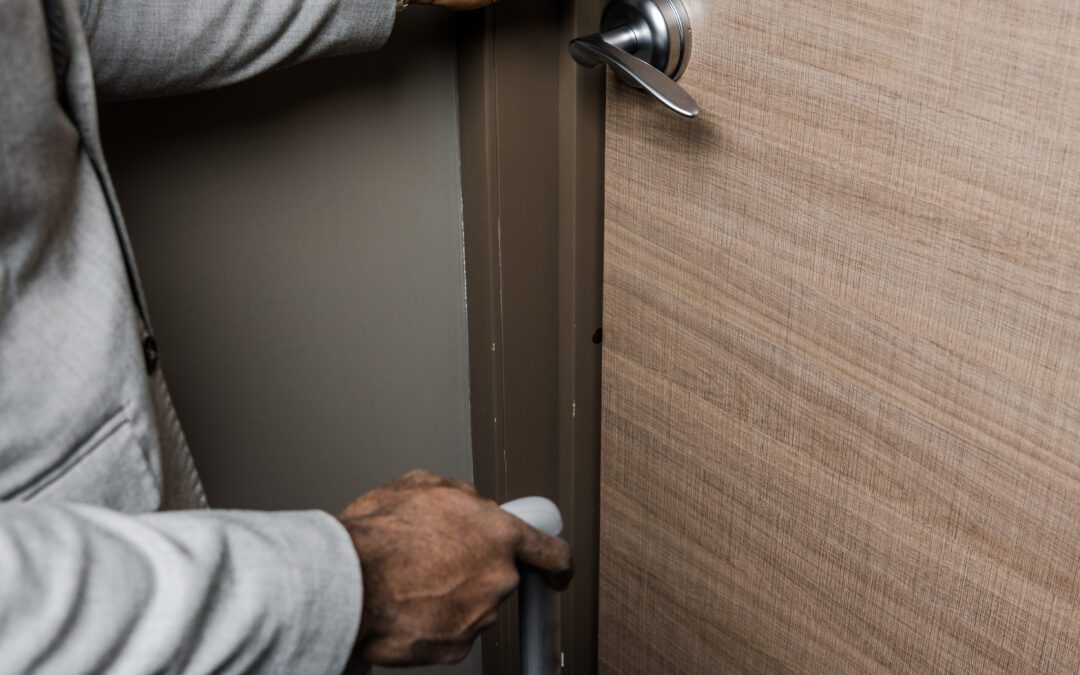
- A standard latch is the regular knob or lever with a latch tongue. You twist or push the lever to release it. It is fine for many doors, but not for big crowd areas.
Close-up of a modern stainless steel door handle and lock on a black door.
Why codes care about panic bars
Crowds freeze when they panic. People push. Hands get full. Smoke can drop fast. A panic bar lets several people hit the bar at once and move out. It needs one motion. That is the main reason codes ask for it in busy spaces. It reduces jam points, like when a knob twists the wrong way or a deadbolt holds the door shut.
Where exit devices are usually required by code
Most building and fire codes point to these spots for panic hardware:
- Assembly spaces with big crowds. Think restaurants, bars, event rooms, gyms, churches, or clubs. When the crowd size passes a set number, exit devices are needed on doors that serve those rooms.
- Schools and day cares. Classrooms and main exit doors often need panic bars when room loads are higher.
- High hazard rooms. Chemical storage, paint rooms, or any area with risky contents. These often need panic hardware no matter the crowd size.
- Electric or special locking systems. Some mag lock setups need listed panic hardware to keep free egress.
Your local authority with jurisdiction makes the call. In Houston, that can be the City of Houston Fire Marshal or Harris County Fire Marshal. They may follow a set edition of the building and life safety codes. Rules can vary by year, by building use, and by door location. A quick check with your inspector saves headaches.
What we usually see in Houston, TX
We see panic bars required on bars and event spaces along Washington Avenue, large restaurants near The Galleria, and schools near Westheimer. Warehouses near Beltway 8 often need them on exit doors off large work floors. Small offices off I-10 with low headcounts may be fine with standard latches on interior doors, but exits that serve a larger area will need bars.
How to tell if your door needs a panic bar
Ask a few simple questions:
- Does this door serve a space where crowds gather to eat, drink, meet, pray, dance, or watch games
- Is it a school room, lunch area, or a main hallway door that serves many students
- Is the room a hazard area with flammables or chemicals
- Is this door a main exit for a large open workspace or retail floor
- Does the door use an electric lock that must allow free egress
If you said yes to any of these, you likely need panic hardware. If you said no to all, a standard latch might be fine. Always check with the inspector for your site.
Key parts of panic hardware that matter
- Type. Rim exit devices mount on the face of the door. Mortise exit devices fit inside the door edge. Surface vertical rods latch at the top and bottom. Each type fits a use case.
- Fire rated or not. Fire doors need fire exit hardware that stays latched. That type cannot use mechanical dogging that holds the latch retracted. It must spring back to latch.
- Dogging. Non-fire rated doors can use a dogging feature to hold the latch back during the day. That gives push-pull ease. At night, release the dog and it latches again.
- Trim. Outside trim can be a lever, pull, or thumbpiece. If the code calls for free egress, do not add keyed trim that blocks the push bar.
- Length and height. Bars should span the proper width and mount at the standard height so people of different sizes can reach it fast.
Standard latch rules that still apply
- Single motion to exit. No chain, no slide bolt, no second latch that needs an extra step.
- No key to exit. A key should never be needed to get out.
- Lever hardware helps meet hand grip rules. Knobs can be hard for some users and are often not allowed on new work.
- Door must swing the right way when serving larger spaces. Many exit doors must swing in the way of travel.
Common mistakes to avoid
- Adding a deadbolt on a door that serves an assembly space. That extra turn blocks egress.
- Mixing hardware not rated for a fire door on a fire door. If the door has a fire label, use hardware that matches that label.
- Picking a bar that is too short for a wide door. People miss it in a rush.
- Installing vertical rod devices where the floor is not flat. That bottom latch drags, then sticks.
- Using an old school double cylinder lock that needs a key on the inside. Not allowed for egress doors that serve occupied spaces.
- Mounting the bar too low or too high. That slows people down.
- Ignoring electric strikes and power. If you add access control, it must fail safe or fail secure in the right way and still allow free exit.
- Blocking the door with a display rack or trash bin. This sounds silly, yet it happens.
- Painting over labels. Inspectors need to see ratings and listings on doors and hardware.
Houston weather tie-ins you should know
- Heat makes metal grow. In August, doors can rub frames. A tight door adds force to the latch. That can make a bar feel sticky.
- Humidity and storms bring rust. Hinges and rods can corrode. Salt in the air from Gulf winds speeds it up.
- Grime from dust and pollen builds up in vertical rods and latches. That slows parts.
- AC drip and mopping water can pool near thresholds. That chews up bottom latches and strikes.
Simple ways to plan for code and safety
- Pick hardware listed for your door type. Look for labels from known labs.
- Keep egress simple. One motion, no key, no tricks.
- Match the building use. A bar works best where people gather or where risk is higher. A lever latch can be fine on a small office inside your suite.
- Loop in your fire marshal early. A five minute chat can save a full rework.
- Train staff. Show them how to check the bar each day. Show them how not to prop doors.
Picking the right device for your door
- Wood or hollow metal door. Rim exit devices are common and easy to service.
- Glass aluminum storefront. Narrow stile exit devices fit better on slim frames.
- Double doors. Choose pairs with a bar on the active leaf and a strike on the other, or use vertical rods as needed.
- High abuse areas. Pick devices with metal end caps and guard plates. Warehouse carts hit doors like linebackers.
- Access control. Pair the bar with an electrified trim, electric strike, or request-to-exit sensor. Free exit must always work.
Real talk from the field
We once met a bar owner off Washington Ave who said, I thought the fancy knob looked great. We said, It does, but your inspector will not love it. We swapped in a panic device, set the dogging for day use, and trained the staff. Next check passed. The knob went home as a paperweight.
Troubleshooting quick guide
- If the bar feels sticky, then clean the latch and lube with a dry spray, not oil.
- If the door drags at the top, then adjust hinges or plane the door edge.
- If the vertical rod will not latch, then check the floor or ceiling strikes for alignment.
- If the bar will not dog down, then confirm it is not a fire door and inspect the dogging key and mechanism.
- If the bar moves but the door stays shut, then check the strike for damage or misalignment.
- If the outside lever will not open, then check that the trim is engaged and the spindle is not broken.
- If an alarm beeps all day, then check the battery or the door position switch.
- If people bump the end cap and it breaks, then add an end cap guard or a push plate to shield traffic.
- If the door slams, then adjust the closer speed and backcheck so the latch can set.
- If the mag lock will not release, then test the power, the request-to-exit, and the fire alarm tie-in.
- If the bar is loose, then tighten through-bolts and check for stripped holes.
- If labels are painted over, then strip the paint gently and show the label.
Myths and facts
- Myth: A deadbolt makes any door safer for exits. Fact: On egress doors with crowds, deadbolts that need a key to exit are not allowed.
- Myth: Any push bar is fine on a fire door. Fact: Fire doors need listed fire exit hardware that stays latched.
- Myth: A small bar is ok on a wide door. Fact: The bar must be long enough to be easy to hit under stress.
- Myth: Panic bars are loud and ugly. Fact: Many modern devices look clean and can include quiet latches.
Care schedule you can follow
Weekly
- Open each exit door. Make sure it unlatches with one push. Check for binds.
- Look for blocked exits. Clear boxes, racks, or cords.
- Wipe dust off the bar and strike. Dust attracts grit.
Monthly
- Tighten all screws and through-bolts.
- Check hinge pins and closer arms for wear.
- Test electric parts like alarms, request-to-exit, and strikes.
- Lube latches and rods with dry lube. Skip oily sprays that hold dirt.
Yearly
- Inspect labels on doors and hardware. Keep them readable.
- Check vertical rod alignment. Floors and frames move over time.
- Review crowd size and room use with your team. If your use changed, your door plan may need a refresh.
- Schedule a pro inspection. A second set of eyes spots small issues before they become big ones.
Standard latch care tips
- Make sure the lever returns on its own and does not sag.
- Check that a single push on the lever unlatches the door cleanly.
- Confirm no extra slide bolts, chains, or surface bolts were added by staff.
- Adjust the strike plate so the latch does not have to fight the frame.
ADA and user friendly points
- Exit devices and levers help people with limited hand strength.
- Height and clearances must allow a clean push with a hand, arm, or hip.
- Do not add grip-only pulls on the exit side of a required egress door.
Access control with panic bars
- Free egress must remain free. The bar should always open the door without power or a code.
- If you add a card reader on the outside, use listed parts that work with the bar.
- Tie mag locks to fire alarms when required so they release during an alarm.
- Keep batteries fresh in alarmed exit devices so false beeps do not train staff to ignore them.
When a standard latch is enough
- Interior office doors with low traffic and low headcount.
- Storage rooms without risky contents, not used by the public.
- Staff-only rooms that do not serve a big area and are not part of an exit path.
- Private suites with small teams, where the main exit is elsewhere and code allows a lever latch.
When a panic bar is the smart pick
- Customer areas with tables and chairs.
- Gyms, worship halls, event rooms, classrooms.
- Any space that might host a crowd on game night or live music night.
- Hazard rooms with chemicals or fuel.
Installation tips that save rework
- Measure twice, drill once. Template the device on the door before drilling.
- Use through-bolts where the maker calls for them. Screws into thin skins will pull out.
- Match device type to door type. Narrow stile for slim aluminum, rim for wood or metal, mortise when needed.
- Mount at standard height. Keep the bar level so the latch hits the strike clean.
- On pairs, set the meeting style. Use a mullion or vertical rods the right way.
- Test with the closer. The door should latch without a hard slam.
Small Houston quirks to plan for
- Many bars and eateries near The Heights add patio covers. When walls move, exits change. Call the inspector when layouts shift.
- Storm season brings power hits. Pick hardware that works in a power loss. Free exit should not rely on power.
Safety notes
- Never chain an exit door. Not at night, not ever. Staff and guests need a clear way out.
- Keep rugs and door sweeps from dragging on thresholds. If the door sticks, fix it right away.
- Teach staff to check exits daily. A 30 second walk pays off.
FAQs
Q: When do I need a panic bar in Houston
A: Most doors that serve larger assembly rooms, schools, or hazard rooms need them. Your fire marshal makes the final call for your site.
Q: Can I keep my deadbolt on an exit door if I add a panic bar
A: No. An exit door must open with one motion without a key. A deadbolt adds a second action.
Q: Are panic bars required on fire doors
A: If the door is part of a fire rated assembly and needs panic hardware, use listed fire exit hardware that stays latched, with no mechanical dogging.
Q: Can I use access control with a panic bar
A: Yes. Use listed parts that allow free exit at all times. Mag locks and strikes must release when the bar is pushed, and often when the fire alarm trips.
Q: How high should a panic bar be mounted
A: Stick with the standard range set by code and the maker. This keeps it within reach for most users.
Q: Do I need a permit to replace a latch with a panic bar
A: Many jobs need a permit and an inspection, especially in public or commercial spaces. Check with the City of Houston or your county office.
Q: What is the difference between panic hardware and fire exit hardware
A: Panic hardware allows fast egress. Fire exit hardware is panic hardware that also meets fire door rules and must stay latched to hold back smoke and flame.
Q: Who should install panic bars
A: A pro locksmith or door tech who works with code-rated hardware. That helps you pass inspection and keeps people safe.
Q: How often should I test my exit devices
A: Test weekly. Add a deeper check monthly, and bring in a pro each year or when use changes.
Need help picking, installing, or fixing exit devices in Houston Reach Emergency Locksmith. We install panic bars, match doors to code, set up access control that still lets people exit fast, and keep your hardware working through Houston heat and storms. Call 832-979-9228 or visit https://emergency-locksmith-services.com for fast, friendly service.