
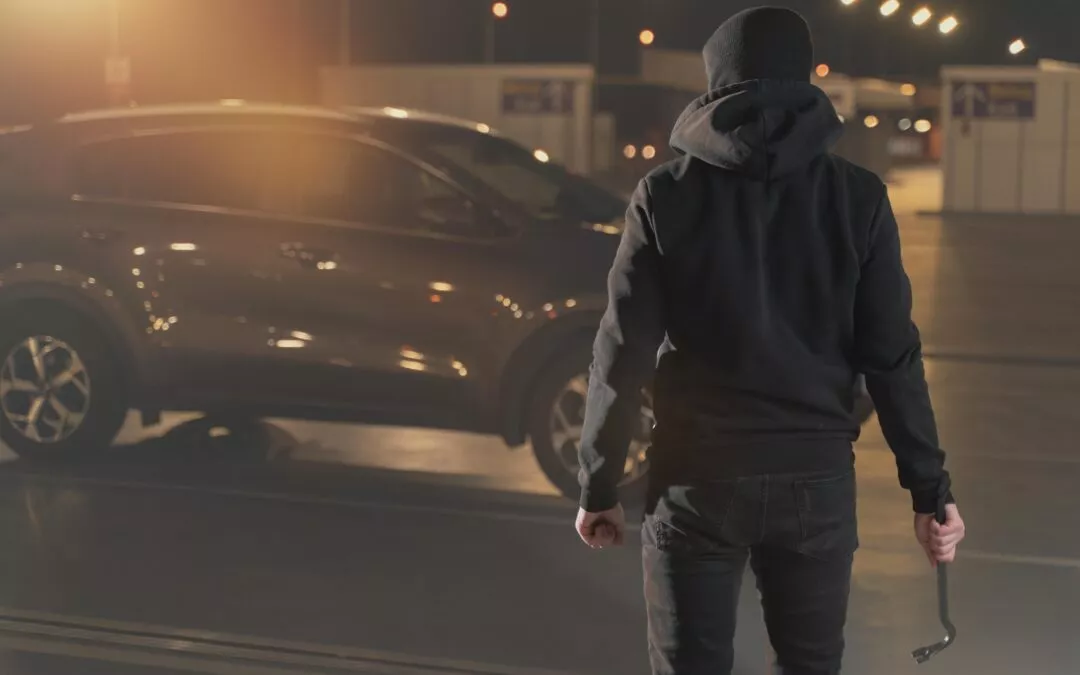
You lock your doors. You take the keys. You think you are good. Then your neighbor gets their truck taken right out of the driveway. That sinking feeling hits. You wonder if your ride is next.
I sat with a Houston driver named Mike. He said, “I parked under a light. I was in and out. Ten minutes tops. Still lost my work tools and my spare key.” He looked at his empty cup holder and laughed a little. “Guess my coffee was safer than my key.”
Thieves move fast. They use new tricks. Some wear vests and look like workers. Some carry gadgets that make your car think the key is near. A few do not even open a door. They tap a wire inside a fender and talk to the car like they work at the factory. Wild stuff.
Good news. You can make your car a hard target. This guide goes past the basics. We keep things clear and friendly. We keep it real for Houston roads, heat, storms, and long work days. We aim for simple steps that punch above their weight.
Male carjacker with balaclava on his head trying to open car door with screwdriver. Thief unlock vehicle. Auto transport crime
Modern car theft tricks
- Relay attack: Your key sits near the door at home. A thief stands outside and boosts the signal. Your car thinks the key is right next to it. Doors unlock. Engine starts. Off they go.
- CAN injection: Some cars have a plug or wire path behind the headlight or fender liner. A thief pokes a tiny hole, clips on a device, and sends fake messages to wake the car and unlock it.
- OBD grab: The OBD port is the small data plug under your dash. Thieves use it to program a fresh key or to take over systems.
- Key clone at the gym or gas station: A crook gets close to your fob for a short time and copies it with a reader. It does not happen every day. It happens enough to worry.
- Tow and go: Trucks get winched up and gone in a minute. No alarm stops a tow if no one sees it.
- Wheel and parts theft: Wheels, tailgates, and catalytic converters are easy money. Houston trucks and SUVs are a big target.
Thieves look for easy wins. They avoid loud jobs. They avoid long jobs. Your plan is layers. Each layer adds time, noise, and risk. Think of it like a thick onion. Thieves may peel one layer. They will not enjoy ten.
Build your layers
Use more than one type of defense. Mix fast visual signs with hidden tricks. Here is a simple plan you can build on.
- Visible locks that shout not worth it
- Hidden switches and smart locks that stop starts
- Alarms and cameras that yell and record
- Parking habits that slow and block
- Tracking that helps find and recover
Strong visual locks that slow thieves
- Steering lock with full cover:The old bar is fine. A full cover style is better. It covers the wheel like a shield. Cutting it takes time and tool noise. Look for a bright color so crooks see it and move on.
- Pedal lock:A pedal lock clamps the brake or clutch and locks it to the wheel or floor. Thieves hate anything that makes moving the car hard. This adds real pain to their plan.
- Shifter lock:A lock that holds the shifter in park or in gear is another hurdle. It is small and plain to see when they peek inside.
- Wheel clamp at home:If your car sits outside at night or at the airport, a wheel clamp works. It stops rolling. A thief will need a grinder. That is loud. They do not like loud.
- Hood lock:Many alarms have a siren under the hood. Thieves pop the hood and cut the power. Add a second latch or hood lock. Now the siren keeps yelling. Their ears will hate you. That is the point.
Door and window hardening
- Steel shields for door locks. Some trucks and vans have weak lock spots. A small shield stops pry tools from reaching the rods.
- Anti pry plates for the door frame. This makes it hard to pop the latch.
- Security film on glass. It looks like tint. It keeps glass from shattering into a big hole. That slows grab and go.
Electronic defenses that bite
- Hidden kill switch:This is a classic for a reason. A small switch cuts the starter or fuel pump. Hide it well. Use it every time you park. Switch spots that work well are inside a trim seam, under a seat, or as part of a harmless button you already touch. You can get fancy and use a relay and a small magnet to arm it. A pro can wire it clean and safe.
- Add an extra immobilizer:Some add-on immobilizers need a fob tap or a phone tap before the car wakes up. The car stays dead even if a thief boosts your key signal. Pick a model with a quiet mode. No beeps. No lights. Thieves cannot work around what they cannot find.
- Lock or move the OBD port:The OBD port is like the front door for your car brain. A small lock box can cover the port. Or move it to a hidden spot and leave a dummy port behind. A thief plugs in and gets nothing. Time wasted. Risk up.
Stop relay attacks on keyless entry
- Keep keys far from doors and windows at home. Ten feet or more helps. A metal box or a Faraday pouch blocks the signal. Many low cost pouches work. Test yours. Stand by the car and try the handle. If it stays locked, you are good.
- Check if your fob has a sleep trick. Some brands let you press a button combo to sleep the fob when you get home. Wake it with a tap. Your owner manual shows this if your car has it.
- Turn off passive entry in the menu if your car has that option. Use the button on the fob to unlock. It adds a step. It removes a big hole.
Smarter alarm setup
Basic chirps do not do much. You want tilt, shock, and glass break. Add a small siren inside the cabin too. A siren inside the car is painful. Thieves jump out fast. Add a hood pin and protect the siren wires. A hood lock helps here.
Dashcam with parking mode
A good dashcam can record while parked. Look for motion and impact triggers. Hardwire it with a battery pack so you do not drain your main battery. Houston heat is rough on gear. Pick a model that can take high temps. Use a small shade to help it live longer.
Parking and placement that tilt odds in your favor
- Face in with your wheels turned to the curb or a wall. That blocks a tow. It also makes a quick roll out tough.
- Park near a camera. Park under a real light. Not a dead bulb. If you park at a store or gym, pick the spot in view of the front door.
- At home use motion lights. Use a camera that sends an alert to your phone. Add a driveway alarm. Little chimes that ping when someone steps near your car help you look out the window.
- Use a post in your driveway. A simple removable post in front of the car blocks a tow. It sends a clear not here message.
- If you have a garage, keep it shut. Add a deadbolt to the garage door track. Shield the quick release cord so a thief cannot fish it with a coat hanger.
- Apartment lots can be tricky. Park near guard shacks or gates. Park near stairs and elevators that see foot traffic. Avoid blind corners and bushes.
Key control habits that matter
- Do not leave keys by the front door or in a bowl by the window. Keep them in a box or pouch that blocks signal.
- When you go to the gym, avoid leaving keys in a locker. Keep them in a small pouch that blocks signal inside your bag. Keep your bag near you.
- At the gas station, lock your doors while you pump. Pocket your fob. Thieves do grab and go at pumps. Stay aware. Keep your phone up and the fob down.
- Stop warming the car in the driveway with the key inside. If you use remote start, use a model that keeps doors locked and shuts off if someone presses the brake without the real key present.
- Do not keep your garage opener in the visor. If your car gets taken, crooks now have a key to your home. Use a small opener on your key ring. Or keep the opener in your pocket.
- Never hide a spare key in the wheel well or bumper. Thieves know all those spots. Use a combo safe at home.
After buying a used car
- Reprogram the car to forget old fobs. Most cars allow this with a scan tool. A pro can do this fast.
- Rekey door locks if they feel worn. A fresh cylinder can stop bump keys and easy picks.
- Check for old trackers. Look under seats, behind trim, under the bumper. If you hear a chirp you did not expect, find it and remove it.
Big city threats to watch
Bump and grab on the road
A light tap to your bumper can be a trick. You step out and leave the engine on. A second person jumps in and drives off. If you get tapped, put your hazards on. Keep your doors locked. Move to a bright lot or a gas station. Trade info there. Turn off the engine and keep the fob with you.
Gas pump signal attack
Thieves hang out near pumps and stores with scanners. They look for easy fobs to grab. Keep your fob in a pouch that blocks signal. Lock the car with the button on the fob. Listen for the click. Do not trust the auto lock if you are not sure.
Fake tow or fake worker
Some crooks wear vests and push cones. They act busy. They hook your car and go. If someone is messing with your car, ask who sent them from a safe distance. Call your tow company or your manager if it is at work. Take a photo and let staff know.
Truck and SUV owners in Houston
- Lock the tailgate. Use a tailgate lock or a latch that cannot be popped with a screwdriver.
- Lock the hitch. A hitch pin with a lock stops trailer grabs and stops bumper tow tricks.
- Secure the bed box. Use hidden bolts. Use a puck lock or a lock that protects the shackle.
- Lock the spare tire hoist. Thieves drop spares in seconds. A lock keeps it where it belongs.
- Third row seats can be targets in some SUVs. Use a cable lock inside the mounts.
- Add a plate or cage for your catalytic converter. Bright paint and a stamped VIN help police ID it if it vanishes.
- Etch glass and parts with the VIN. Thieves hate traceable parts.
Smart use of trackers
Recovery is a race. Trackers help your odds a lot. Use at least two. Hide them in different spots.
- Main hardwired tracker:A pro can wire a tracker with a backup battery. Hide it deep. Some hide behind a rear panel. Some hide inside a spoiler or a tail light pocket. Metal blocks GPS. Plastic does not. Test it before you close up the trim. Set alerts for movement and for a fence around home and work.
- Small beacon backup:Use a tiny coin cell tracker in a seat cushion or under a floor mat. Phones can find them. They ping nearby devices. Keep in mind some devices warn a thief after a while. For more quiet operation, use a small GPS puck with no beeps. Tape the speaker if it chirps.
Do not brag about your tracker spots online. The fewer people know, the better.
Mark your ride to help recovery
- Take photos of your car from all sides. Include dents and stickers. Keep them on your phone and in email.
- Note your VIN, plate, and any unique marks. Email it to yourself.
- Engrave or mark high value parts. Wheels. Tailgate. Seats. Converter. Use paint and stamps.
Home base security that supports your car
- Good locks on gates and sheds. Thieves like your tools too. Tools cut locks and pipes.
- Lights at the corners of your house with motion sensors. Point them to the driveway.
- A camera that faces the street and your car. Place it high and in plain view. Place a second camera lower that catches faces.
- A little chime or driveway sensor inside your home. It pings when someone walks by the car. You can glance at the camera and decide fast.
Heat, storms, and tech in Houston
- Keep spare batteries for fobs in a cool drawer. Weak fobs can act odd. They can leave doors unlocked if you trust auto lock too much.
- Pick gear that can take high heat. Dashcams and trackers have ratings. Pick ones that match summer heat.
- Use a sun shade when parked. Your dashcam and fob will last longer.
- If a flood is coming, move your car to high ground early. Do not leave it on the street near drains.
- After heavy rain, check seals near the fenders. Water near the headlight area can lead to wire rust. Thieves target those spots for CAN tricks. Fix loose liners and cracks so wires are not easy to reach.
Garage door habits that matter
- Add a slide lock or a deadbolt to the garage door track. Many add a simple pin through the track at night.
- Shield the quick release rope so it cannot be fished with a hook from outside.
- Use a smart garage controller that pings you if the door stays open. Close it from your phone if you forget.
What to do after a break in or a weird event
- Scan your car for unknown trackers. Apple and Android can help hunt. Walk around your car with your phone and listen for alerts. If you hear beeps under the car, look for a small puck or tag. Take photos and remove it.
- Inspect wheel wells and fender liners. Look for holes that look drilled. Tape and seal them. Move wires away from easy reach.
- Reprogram keys if a bag was stolen near your car. Do not wait. Wipe old keys and add new ones.
- File a police report for any theft or attempt. Share video if you have it. File with your insurance too.
- Talk with a pro about a kill switch or an immobilizer. Add gear while the scare is fresh. It pays off.
Daily checklist you can do in one minute
- Lock doors and windows. Always. Even for quick stops.
- Pocket the fob. Do not leave it in a cup holder or in the gym bag on the seat.
- Use the steering lock. Use the kill switch. Habits make layers strong.
- Park smart. Pick light. Pick cameras. Turn wheels.
- Grab your garage opener. Grab your gun if you carry. Do not leave it in the car.
- Quick look at your dashcam live view before bed if you have one. Peace of mind helps.
Upgrades that give big gains for little cost
- Faraday pouch for keys. Cheap and strong.
- Bright steering wheel cover lock. Acts like a stop sign.
- OBD lock cover. Keeps clone tools out.
- Door lock shields for common pry points. Saves you a big bill.
- Motion lights on your driveway. You feel in control.
- A small GPS unit. Worth its weight in gold if your car moves without you.
What not to do
- Do not post your new key fob on social media. Photos can show codes and model info.
- Do not keep the car manual inside with key programming steps marked. Store the manual at home.
- Do not keep a spare key in the center console. Thieves check there first.
- Do not ignore a fob that acts weird. Replace the battery. If it still acts odd, get it checked.
Talk between two neighbors
Sam said, “I added a bar on my wheel and a kill switch. My wife rolled her eyes. The next week someone tried the handle and left. My camera caught it.”
Lee said, “I thought my remote start was safe. I left it idle while I took the trash out. Heard my truck shift. Someone hopped in. The engine cut when he hit the brake. Remote start shut it down like a champ. He ran. My hands shook for an hour.”
Sam said, “Layers, man. Like an onion. Make them cry.”
Lee laughed. “My truck is now an onion with hot sauce.”
A quick word on tech brands
You will see many brand names online. Some are great. Some are junk. Read reviews from real owners. Pick gear from makers that share real specs and have clear support. Test everything the day you get it. Lock. Unlock. Arm. Disarm. Drive around the block and make sure your car does not stall. If wiring scares you, get a pro to install it clean. Messy wires can cause odd problems.
How thieves pick targets
They scan for dark spots. They pull door handles in rows. They look for the easy score. A bag on a seat. A truck with a half open window. A car that blinks but does not flash the mirrors. Your job is to look boring and stubborn. Nothing easy inside. Bright lock on the wheel. No quick start. If they do try, your alarm screams. Your camera records. Your tracker pings your phone. That sends them to find a softer mark.
Why layers work
No single gadget saves every car. Thieves share tips. They bring new toys. Your layers force them to fight on many fronts. They hate lost time. They hate attention. A five minute job turns into a mess. They walk away.
Extra tips for work crews
Many Houston crews keep tools in trucks. That makes your truck a target at dawn and at lunch.
- Use a steel toolbox with hidden hinge pins. Pick a lock that hides the shackle.
- Bolt the box through the bed with plates under the bed. Do not trust small sheet metal screws.
- Use a motion sensor inside the box that rings a key fob on your belt. You will hear it from inside the shop.
- Park with the box against a wall. Doors cannot open all the way.
Catalytic converter defense
- Install a steel plate or cage. Pick one that uses many bolts. Spread the mounts. Saw blades cry when they hit plates and mesh.
- Paint the converter bright and stencil your plate number. Police like clear marks.
- Park with the converter near a curb or wall to block saw space.
- Add a tilt sensor and a loud siren near the floor. Set it to trigger if the car lifts more than a few degrees.
What to tell your family
Share simple rules. Keep it calm. No scare talk needed.
- Lock every time. Even at home.
- Keep keys away from the front door. Use the box on the shelf.
- Do not post trips in real time. Share photos after you get back.
- If something feels off, come inside and call for help. Do not play hero.
Houston twist and common sense
- Keep a small towel to cover gear on the seat. Better yet, take gear with you.
- Use a cooler bag for tools or a tool bag that does not scream fancy gear inside.
- Many sports fields have dark corners. Park near the main lot and walk a bit more.
- Big events bring tow trucks and fake staff. Snap a photo of your car and row number so you can find it fast and leave before late night mischief starts.
When to call a pro
DIY is great. Some jobs need skill. If wires make you nervous, that is normal. A pro can add a kill switch, move your OBD port, set up an immobilizer, and program keys. Clean work matters. A clean job looks stock and hides the goods. Thieves cannot attack what they cannot see.
Your action plan for this week
- Day one
- Order two Faraday pouches for keys.
- Order a bright steering wheel lock.
- Day two
- Set your car menu to turn off passive entry if your model allows it.
- Move your keys away from the front door.
- Day three
- Add motion lights to your driveway.
- Place a camera where it sees the car.
- Day four
- Book a pro to install a kill switch or add-on immobilizer.
- Ask about an OBD lock cover and a hood lock.
- Day five
- Buy a dashcam with parking mode. Test it at night.
- Paint your converter and set a plan for a cage if you drive a high risk model.
- Day six
- Install a GPS tracker. Hide it well. Set alerts.
- Record your VIN and take photos of your car. Email them to yourself.
- Day seven
- Walk your family through the new habits. Lock. Pocket. Check.
- Drink a cold tea. You earned it.
Short answers to big questions
- Will a steering wheel lock stop a pro?It will not stop every pro. It will push many away. Most thieves want quiet and fast. A lock is neither.
- Is a kill switch safe?Yes when wired right. A pro knows the safe circuits to use. Many set it up so the car dies only at start. Not while driving.
- Can thieves beat a Faraday pouch?Only if the pouch is weak or worn. Test it. Replace it if it fails. They are cheap.
- Do trackers lead to my car right away?Many times they help a lot. Do not chase thieves. Share the location with police. Stay safe.
- What about insurance?Call your agent. Ask what discounts exist for alarms and trackers. Some plans give you a break on costs.
Last little things that add up
- Use lock nuts on wheels and on a spare under the truck bed. Keep the key socket in the glove box or with you.
- Zip tie your license plate so it does not rattle loose. Stolen plates are a big pain.
- Place a tiny sticker that says GPS on board. It may be true. It also plants doubt.
- Keep your car clean. A clean car draws less eyes than a car full of stuff.
A short true tale with a happy ending
A Houston dad named Rico had a lifted truck. He loved that truck like a kid loves a first bike. He added a wheel lock, a kill switch, and a cheap GPS puck under the bed liner. One night his phone buzzed. Movement alert. He looked at the camera. Two figures by the truck. The siren screamed. They ran. The GPS showed the truck never moved. He smiled. He said, “I slept like a baby after that.” He then moved his keys out of the kitchen and into a little metal tin. He laughed. “My grandma used to keep cookies in a tin. Now my keys live in one.”
Bring it all together
Pick a few steps this week. Build layers over time. You do not need fancy gear on day one. Start with habits and a bright lock. Add a kill switch. Add a tracker. Thieves will feel the pain. You will feel calm.
Need expert help in Houston?
Emergency Locksmith offers fast mobile help across Houston. We cut and program car keys and fobs. We repair and replace ignitions and door locks. We rekey after a theft or after buying a used car so old keys stop working. We can install hidden kill switches and OBD port locks. We can add door shields and suggest the right alarm and immobilizer setup for your make and model. We fix lock damage after a break in and get you back on the road with stronger gear than before. Call
832-979-9228 or visit https://emergency-locksmith-services.com to get help now. Mobile service means we come to you at home, work, or on the road and we work on your schedule.