
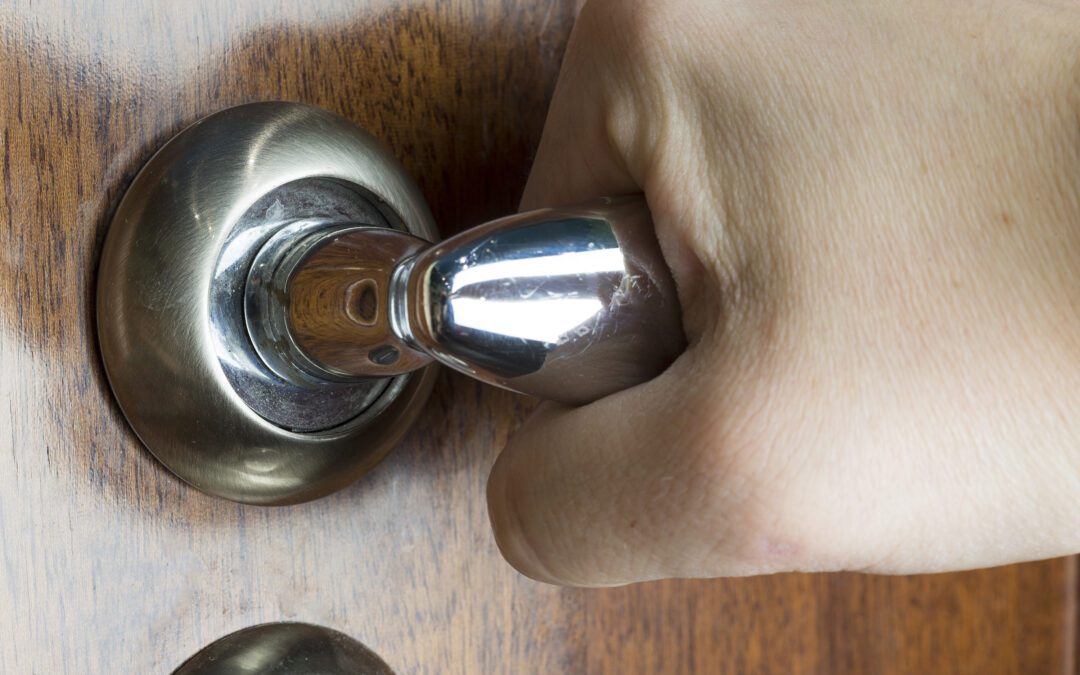
Picking between a deadbolt, a knob, or a lever is simple once you match the lock to the door and how you use it. Use a deadbolt on entry doors for strong lockup, add a knob or lever for the latch you grab all day, choose a lever if grip is a problem, and pick tougher grades for busy doors. That is the core of deadbolt vs knob vs lever.
Meet the everyday options
Let’s set the stage with a quick chat, no fancy talk, just what matters.

Professional blonde middle aged carpenter checking quality of wood product in his carpentry workshop.
Deadbolts
- What they are: A separate lock that throws a thick bolt into the frame. No spring latch. That bolt holds the door shut when locked.
- Where they shine: Front doors, back doors, garage entry, any door you want to keep locked tight.
- Pros: Strong against a kick. Harder to slip with a tool. Clear locked or unlocked feel. Works with smart keypads or Wi-Fi options.
- Cons: A deadbolt does not latch the door by itself. You still need a handle set or passage knob or lever for daily use. A double cylinder type needs a key inside, which can slow you down in an emergency. Check codes.
Knobs
- What they are: The round handle most folks grew up with. It turns, retracts a spring latch, and lets the door open.
- Where they shine: Bedrooms, closets, storage rooms, low to medium traffic spots.
- Pros: Cheap to replace, small, familiar. Works fine when grip is not an issue.
- Cons: Harder for kids, folks with arthritis, or anyone carrying gear. Easier to slip with a tool if used alone on an exterior door. Not friendly for ADA rules in commercial spaces.
Levers
- What they are: A handle you push down. It turns the latch with little force.
- Where they shine: Entry doors, offices, garages, anywhere with heavy use. Great for mixed users, from kids to seniors.
- Pros: Easy grip, quick exit, meets ADA needs in many cases. Clean look, lots of styles, works well with gloves.
- Cons: If the set is cheap, the handle can sag with age. Dogs sometimes learn to open them. Needs good install so the lever points the right way.
Quick match guide by door and use
Think of each door like a player on a team. Each role needs the right gear to win the day.
Front door
- Best stack: Grade 1 or Grade 2 single cylinder deadbolt plus a lever or knob. Lever wins for daily comfort.
- Smart add: Keypad or smart deadbolt if you want code entry, no key handoffs.
Back door to patio or yard
- Best stack: Single cylinder deadbolt plus lever. If glass is nearby, pick a reinforced strike and long screws in the frame.
- Weather tip: Use a finish that resists corrosion. Houston humidity and salt in the air near the bay can be rough on cheap finishes.
Garage to house door
- Best stack: Self-closing hinges are common. Add a deadbolt for better lockup when you leave town. Lever makes it easy when your hands are full.
Side gate or utility room
- Best stack: Lever with a lockable latch, or a deadbolt if the door is solid. Pick parts that say weather rated.
Bedrooms and home office
- Best stack: Privacy knob or lever. If you store files or gear, use a keyed entry lever plus strike upgrade.
Bathroom
- Best stack: Privacy knob or lever with emergency release on the outside. Lever helps when your hands are wet.
Commercial suite off Westheimer or near the Galleria
- Best stack: Grade 1 lever with storeroom or office function, deadbolt on the main door after hours. Panic hardware for exit doors as required.
Grip needs, no shame in easy
Picture this scene. Your hands are full of groceries, the dog is doing zoomies, and a thunderstorm is coming from I-10. A lever lets you bump the handle with an elbow. Boom, you are in. For older hands or sore wrists, levers make life easier. In many offices, ADA rules call for lever sets. At home, it is just smart and kind on your joints.
Traffic and durability
Hardware has grades that show how tough it is. Grade 1 handles the most abuse, Grade 2 sits in the middle, Grade 3 is basic. If a door sees lots of use, pick Grade 1 or Grade 2. Think front entry, office door, or a busy garage door. A quiet closet can live with basic gear.
Security stack that makes sense
- Single cylinder deadbolt: Key outside, thumbturn inside. Simple and safe for quick exit.
- Double cylinder deadbolt: Key both sides. Used in some spots with glass near the lock. Many fire rules do not allow this in a home when occupied. Use care, and ask before you lock.
- Door frame and strike: Long screws into the studs make a clear difference. A strong lock needs a strong home base.
- Latch strength: A latch with a heavy strike plate stops casual slip attempts. Add a latch guard if the gap is wide.
Weather tie-ins for Houston
Heat makes metal expand a bit. Humidity swells wood. After a week of sticky air near Midtown, your latch may rub or your deadbolt may bind. A small tweak to the strike or hinges can fix it. Rain brings rust to cheap screws and plates. Pick finishes rated for coastal air if you live near Clear Lake or Baytown. A tiny shot of dry lube now and then keeps things smooth.
A quick story from a Tuesday on Kuykendahl
“Can you make this door easier to open?” a dad asked while juggling a baby seat. The knob was fine, but his hands were busy every morning. We swapped the knob for a Grade 2 lever and tuned the strike. He texted a week later, “Best small upgrade I have done.” Sometimes a simple change cuts stress by a mile.
What fits your door build
- Door thickness: Most homes use 1-3/8 or 1-3/4 inch doors. Check the box to be sure your set fits. Many sets adjust, some do not.
- Backset: 2-3/8 or 2-3/4 inches from the edge to the center of the hole. Get the right latch for a clean fit.
- Bore holes: Main hole is about 2-1/8 inches. The edge hole is about 1 inch. If your door is older, holes might be odd. Adapters can save the day.
- Door material: Wood holds screws well but can swell. Steel doors are stable but need the right bits for drilling. Fiberglass likes through-bolts so the trim stays snug.
Style without fuss
Knobs look classic. Levers look modern. Handle sets on front doors give a strong first look. Pick the one that fits your home vibe. Oil rubbed bronze, brushed nickel, and black are common in Houston homes. If the sun hits your door all day, choose a finish that resists fade and pitting.
Deadbolt vs knob vs lever, the quick head to head
Security
- Deadbolt: High security for a single lock piece.
- Lever or knob: Medium by itself, better when paired with deadbolt.
Ease of use
- Lever: Easiest. Great for busy hands.
- Knob: Fine when grip is not a problem.
- Deadbolt: Not a handle, but smooth with a thumbturn.
Traffic tolerance
- Lever: Best pick for heavy use, if you get a strong grade.
- Knob: Good for light to medium use.
- Deadbolt: Not traffic sensitive, but buy a good one so the bolt keeps shape.
Smart lock ties
Keypads and smart deadbolts are common across Houston apartments and single family homes. Many work with Wi-Fi or Bluetooth. Some deadbolts keep the old key as backup. Batteries last months, but heat can shorten life a bit. Keep a spare battery in a drawer. Avoid cheap no-name gear, as support and parts can be a pain.
Troubleshooting, short and sweet
- If the deadbolt sticks, then check door alignment and adjust the strike plate.
- If the lever sags, then tighten the set screw or replace the return spring set.
- If the knob turns but the door will not open, then the latch tailpiece may be broken, replace the latch.
- If the key will not turn, then try a dry graphite lube, if no change, the cylinder may be worn.
- If the latch hits the strike, then move the strike slightly or adjust hinges with a tweak.
- If the lock feels gritty, then clean and lube the moving parts with dry lube, skip oil.
- If the smart deadbolt is dead, then swap batteries, check the door is not binding, then re-sync.
Common myths and the real deal
- Myth: A knob with a lock is enough for a front door. Fact: Add a deadbolt for real hold strength.
- Myth: All levers are weak. Fact: Grade 1 and 2 levers are tough and pass heavy use tests.
- Myth: Double cylinder deadbolts are the best choice. Fact: They can block fast exit. Many places limit them.
- Myth: Smart locks are easy to hack. Fact: Good brands use strong methods. Most break-ins hit the door frame, not the code.
Care schedule that keeps things smooth
- Weekly: Wipe the handles and keypads with a soft cloth. Moisture and grime are grit magnets.
- Monthly: Check screws on levers, knobs, and strikes. A quarter turn can stop a sag.
- Yearly: Lube the latch and deadbolt with a dry spray. Swap smart lock batteries before peak summer.
Houston proof points from the field
We see lots of sun-faded hardware on west facing doors near Memorial and The Heights. A quick swap to a better finish holds up longer. In older bungalows around Montrose, door frames can be out by a hair. A hinge shim or strike shift makes locks click like new.
What we usually see in Houston, TX
- Front doors with Grade 2 deadbolts and levers work well for most homes.
- Patio doors near pools need corrosion resistant parts.
- Commercial suites off Westheimer often go with Grade 1 levers and after hours deadbolts.
- Smart deadbolts are rising fast in rentals near Midtown.
Safety notes, short and clear
- Keep exits free for a fast way out. Think twice about double cylinder deadbolts in living spaces.
- If glass is near the lock, use a reinforced strike and consider laminated glass or bars that release fast.
- Do not spray oil into cylinders. It grabs dust.
Pick by people, not just by door
If you live with kids, seniors, or folks with grip pain, go lever. If you want max lock strength, add a deadbolt. If you want both, that is normal, and smart. Picture the daily flow from driveway to kitchen. Now pick the handle that makes that path easy and safe.
Handles by function, quick read
- Passage: No lock, just a latch. Closets or halls.
- Privacy: Push or turn button, can be opened from outside with a small tool. Bedrooms, baths.
- Keyed entry: Lockable from inside and by key outside. Good backup on exterior doors.
- Storeroom: Always locked on the outside, free exit from inside. Common in shops.
- Classroom: Lock from outside with a key, inside stays free. Used in schools and offices.
Match finish with weather and touch
Brass can patina in humid air. Black looks sleek but shows prints. Stainless holds up near salt air. Brushed nickel hides small scratches. If you grill on the patio and touch handles with messy fingers, pick a finish that cleans up fast.
Frame and hinge talk that pays off
The best deadbolt is only as good as the frame. Use long screws that bite into the studs. A wrap around strike plate helps too. Check hinges. If the top hinge is loose, the latch will rub the strike. A few turns on the screws, or a longer screw, can pull the door back into square. Think of it like tuning a guitar, small twists, clean sound.
Little dialogue with big value
“Can I keep just one key for all doors?”
“Yes, we can key locks alike so one key fits them all.”
“What if I lose that one key?”
“We can rekey the locks to a new key, no need to swap all the hardware.”
“I hate keys. Can I go keyless?”
“Use a keypad deadbolt with a backup key. Pick a code you can punch fast.”
“Will the heat kill my smart lock?”
“Batteries drain faster in summer, but good units hold up. Keep shade if you can.”
When to pick a knob
- You like a classic round look.
- Grip is fine for the people using it.
- Door is low traffic, like a linen closet.
- Budget is tight, and you still want a clean upgrade.
When to pick a lever
- You want easy in and out.
- Grip or wrist pain is a factor.
- Door sees heavy use, like the garage entry.
- You need ADA friendly hardware at work.
When to pick a deadbolt
- Any exterior door you want secure.
- A rental turns over and you want fast rekey options.
- You want smart access with a keypad or app.
Install tips you can use
- Measure twice, drill once. Mark the backset before you drill.
- Use a sharp hole saw. Let the tool do the work.
- Chisel the latch plate area clean and flat. A snug fit makes the latch sit right.
- Do not over tighten screws on trim plates. Hand tight is enough, then a nudge.
- Test latch, then add the deadbolt. Fix rubs before you close up.
When gear talks to style
Front entry sets pair a big handle with a thumb press plus a deadbolt above. It gives you both comfort and strength. In a modern townhome off Washington Ave, a square lever with a matte black deadbolt looks sharp. In a craftsman near the Heights, a classic knob with a round deadbolt fits the home’s feel.
Smart lock notes for Houston life
- Code sharing: Give a guest code that expires after a day. Great for pet sitters.
- Backup: Keep a real key hidden with a person you trust, not under the mat.
- Wi-Fi: Low power Wi-Fi bridges help, but place them out of sun and rain.
- Storm prep: Before a storm, check batteries and test locks. Heat and moisture can swell doors. A quick test day can save stress night.
Commercial quick hits
- Use Grade 1 levers on doors with heavy foot traffic.
- Check local codes for exit hardware. Many exit doors need panic bars.
- Storeroom function locks keep the door secure without staff forgetting to relock.
- Master key systems help managers while staff keys have limited access.
A small fix, big comfort
We visited a shop off Telephone Road. The back door lever sagged, and staff had to jiggle it. We swapped a worn spring cage and aligned the strike. Time spent, under an hour. Gains, doors that open and close like they should, less fuss, fewer lockouts at smoke breaks.
FAQs
- Q: Which is more secure, a deadbolt or a locking knob?
A: A deadbolt gives stronger lockup. Use it with a lever or knob for daily use. - Q: Are levers better than knobs if I have sore wrists?
A: Yes. Levers need less force and are easier to push when hands hurt. - Q: Can I use a double cylinder deadbolt at home in Houston?
A: Some places allow it, some do not. It can slow exit. Ask a pro and check rules for your home type. - Q: Why does my deadbolt not line up after a rainy week?
A: Wood swells in humidity. Adjust the strike plate a bit, or tune the hinges so the door sits square. - Q: Do smart deadbolts work in our heat?
A: Good units do. Change batteries as needed, keep shade if you can, and check fit so the bolt does not bind. - Q: Can I rekey my locks to one key?
A: Yes. Many knobs, levers, and deadbolts can be rekeyed so one key works them all. - Q: What lock grade should I pick for a busy front door?
A: Grade 2 is a solid pick for most homes. Grade 1 if traffic is heavy or you want extra margin. - Q: My dog opens the lever. What can I do?
A: Flip the lever orientation if possible, use a lock function, or add a high deadbolt they cannot reach.
The bottom line choice
Think of your door like a small team. The deadbolt is the lineman, holds strong when it counts. The lever or knob is the running back, lots of touches, quick moves. Put them together, and the play works all day. In Houston, add a little weather sense, keep screws tight, and your doors will treat you right.
Ready for hands-on help?
Ready for hands-on help choosing or installing the right deadbolt, knob, or lever for your place in Houston? Call Emergency Locksmith at 832-979-9228 or visit https://emergency-locksmith-services.com. We match gear to your door, traffic, and grip needs, rekey for one-key convenience, and set hardware so it works smooth in our heat and humidity. We help you lock right, move fast, and feel secure.